


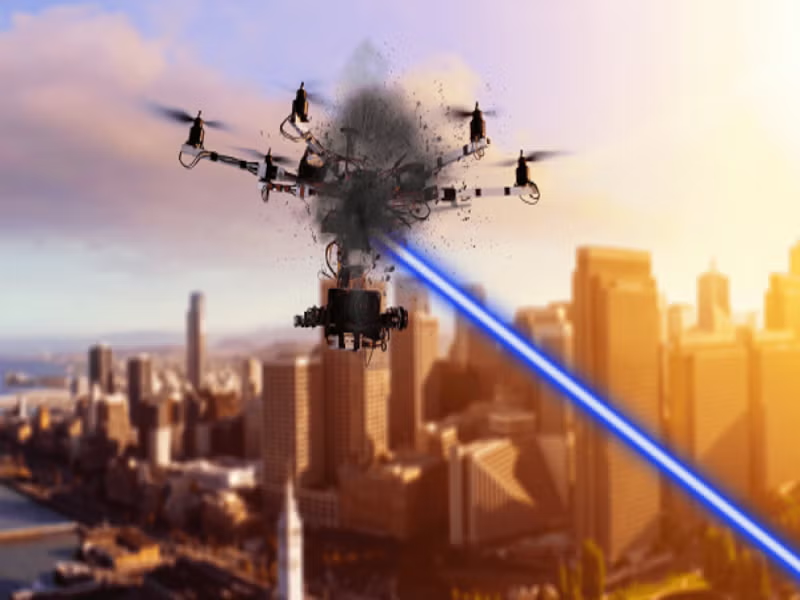
The rapid proliferation of small unmanned aerial systems (UAS) has created a new security challenge for military forces worldwide. From low-cost reconnaissance drones to coordinated swarm attacks, modern battlefields increasingly require fast and scalable counter-drone solutions.
Directed energy weapons (DEW), particularly high-energy laser systems, are emerging as one of the most promising technologies for counter-drone defense. Unlike traditional missile-based air defense systems, directed energy weapons provide a low-cost per engagement solution capable of neutralizing multiple aerial threats in rapid succession.
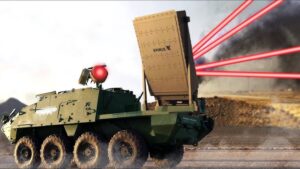
Major defense programs in the United States, Europe, and Asia are accelerating the deployment of laser-based counter-UAS platforms. Systems such as vehicle-mounted high-energy lasers and ship-based directed energy interceptors are now entering operational testing phases.
These systems offer several strategic advantages. Laser weapons operate at the speed of light, enabling extremely fast target engagement. They also reduce logistical burdens since they rely on electrical power rather than physical ammunition.
In recent military exercises, directed energy systems have demonstrated the ability to track, target, and neutralize small UAVs, loitering munitions, and surveillance drones with high precision. This capability is particularly important in environments where traditional air defense systems may be inefficient against small and inexpensive aerial threats.
However, operational limitations still exist. Atmospheric conditions, power generation requirements, and thermal management remain key technological challenges for large-scale deployment. Defense developers are currently focusing on improving beam control, targeting sensors, and power efficiency to increase battlefield reliability.
Despite these challenges, directed energy weapons are steadily transitioning from experimental prototypes to operational defense assets. As counter-drone threats continue to evolve, laser-based systems are expected to become a central layer in modern multi-domain air defense architectures.
Directed energy counter-drone systems are transitioning from experimental prototypes to deployable operational assets in modern air defense structures.
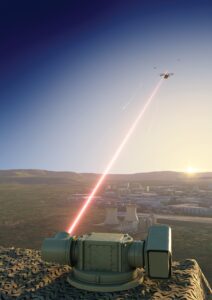
Laser-based interception platforms provide rapid-response neutralization capabilities against small UAV threats, particularly in swarm scenarios where traditional kinetic systems face cost inefficiencies.
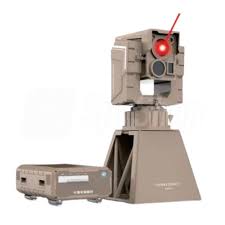
As operational maturity increases, directed energy systems are expected to become core components of layered counter-UAV defense networks.

UAV Intelligence will continue monitoring developments in laser-based interception technologies and counter-drone architecture evolution.
— Analysis by Gurkan Bal
Founder & Editor | UAV Intelligence


