


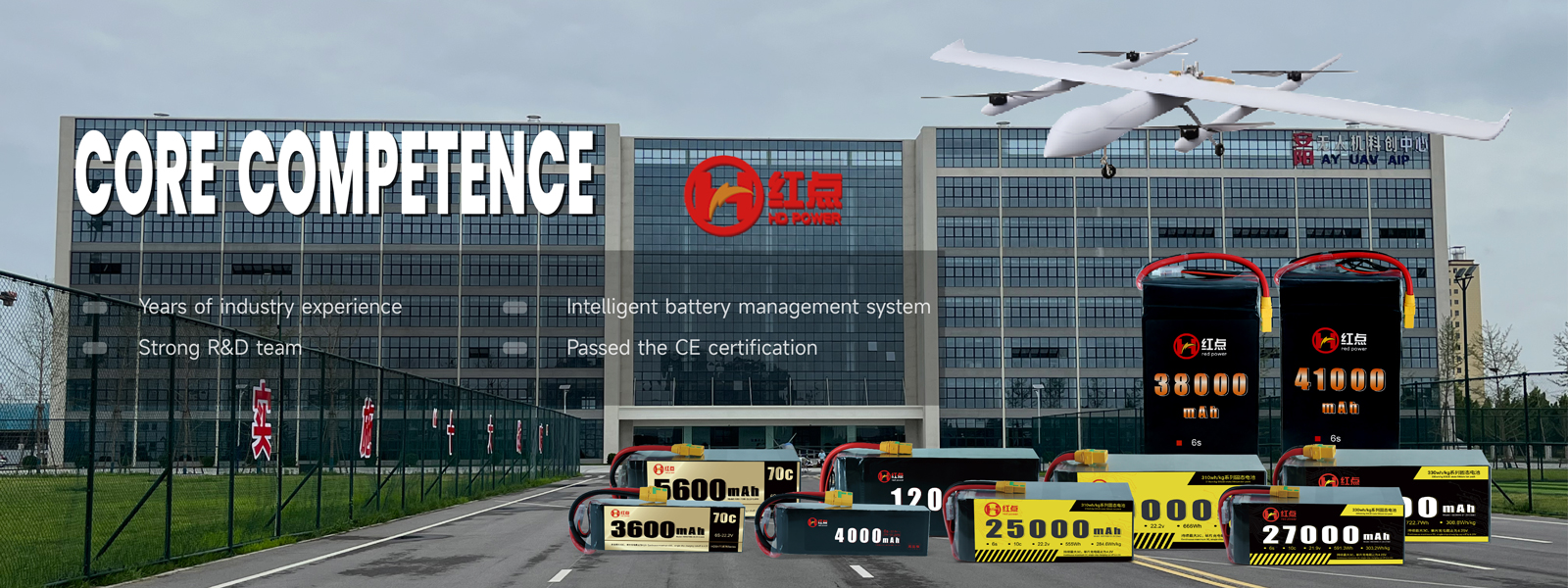
UAV Intelligence Operations Enter a New Era: HD UAV Power’s Next-Generation Battery Technology Draws Attention

The global UAV industry is no longer evolving only through artificial intelligence, autonomous flight systems, and ISR capabilities. One of the most critical transformations now shaping the future of unmanned aviation is energy technology.
As mission durations increase and operational demands become more complex, battery performance has become one of the key limiting factors for modern UAV systems. Long-range surveillance, BVLOS operations, tactical reconnaissance, border security, industrial inspection, and emergency response missions all require significantly higher endurance and energy efficiency than conventional lithium-ion batteries can provide.
This is where next-generation semi-solid-state battery systems are beginning to redefine the market.
Among the companies gaining strong attention in this field is HD UAV Power, a manufacturer specializing in high-energy-density battery solutions for professional UAV operations.
Higher Energy Density, Longer Mission Capability
According to technical specifications published by HD UAV Power, some of their advanced UAV battery systems are reaching energy density levels between:
- 330–380 Wh/kg
These figures represent a significant leap compared to traditional lithium-ion UAV batteries currently used in many commercial and industrial drone platforms.
Higher energy density directly translates into:
- extended flight endurance,
- longer ISR operations,
- increased payload capacity,
- reduced battery swap frequency,
- improved mission efficiency.
For intelligence and surveillance operations, even a small increase in endurance can provide major tactical advantages.

Critical Impact on ISR and Security Missions
Modern intelligence operations increasingly depend on persistent aerial observation. UAV platforms are now heavily used in:
- border security,
- thermal surveillance,
- urban monitoring,
- tactical reconnaissance,
- critical infrastructure inspection,
- wildfire monitoring,
- maritime patrol operations.
One of the biggest operational limitations in these missions has always been energy capacity.
Next-generation battery systems developed by HD UAV Power aim to address this challenge by enabling:
- longer operational windows,
- more stable power delivery,
- higher thermal resistance,
- lower overall system weight.
This combination is especially important for fixed-wing ISR drones and heavy-lift multirotor UAV platforms.
Thermal Stability and Flight Safety
Battery safety remains one of the most critical concerns in electric aviation and UAV operations. Thermal runaway events can lead to:
- onboard fires,
- sudden power loss,
- mission failure,
- aircraft destruction.
Semi-solid-state architectures are designed to improve thermal stability by reducing the amount of volatile liquid electrolyte inside the battery structure.
According to industry reports and manufacturer data, systems like those developed by HD UAV Power may offer:
- improved thermal resilience,
- safer high-temperature operation,
- lower overheating risk,
- enhanced cycle durability.
For military, law enforcement, and industrial UAV operations, these safety improvements are strategically significant.
The Future of Electric UAV Aviation
Industry experts believe the next stage of UAV evolution will be closely tied to advancements in:
- solid-state battery systems,
- AI-based power management,
- ultra-fast charging technologies,
- lightweight composite energy systems.
As electric aviation rapidly evolves, energy management is becoming just as important as aerodynamics and autonomous control systems.
Companies focusing on high-density UAV energy solutions, including HD UAV Power, are expected to play a major role in shaping the future of long-endurance unmanned aviation.
The UAV industry is entering a new phase where operational superiority may depend not only on aircraft design, but on who can deliver the safest, lightest, and most efficient airborne energy systems.
Analysis by
Analysis by Gürkan Bal
Founder & Editor | UAV Intelligence
Aviation & UAV Systems Analyst