
• About
  • Contact
  • Editorial Policy
  • Home – Eski
  • Privacy Policy
  • UAV Intelligence
Thursday, September 17, 2026
  • Login
UAV Intelligence
  • UAV News
  • Defense & Military UAV
  • Commercial & Civil Drones
  • Technology & Components
  • Analysis & Reports
  • Industry & Companies
  • Counter-Drone Systems
  • Advanced Air Mobility
  • AI & Autonomous Systems
  • Education & Training
No Result
View All Result
  • UAV News
  • Defense & Military UAV
  • Commercial & Civil Drones
  • Technology & Components
  • Analysis & Reports
  • Industry & Companies
  • Counter-Drone Systems
  • Advanced Air Mobility
  • AI & Autonomous Systems
  • Education & Training
No Result
View All Result
UAV Intelligence
No Result
View All Result
MARKETPLACE MARKETPLACE MARKETPLACE
Home Defense & Military UAV

Next-Generation Military UAV Deployment Trends in 2026: Strategic Shifts and Operational Implications

Global defense forces are accelerating next-generation UAV deployment strategies across multi-domain operations.

Gürkan BAL by Gürkan BAL
March 5, 2026
in Defense & Military UAV
0

✍️ INTRODUCTION

Military UAV deployment trends in 2026 indicate a major transformation in global defense planning and unmanned systems integration.

The global military UAV landscape is entering a new operational phase in 2026. Defense forces worldwide are accelerating the deployment of next-generation unmanned aerial systems (UAS) designed for multi-domain operations, autonomous coordination, and real-time battlefield integration.

From high-altitude long-endurance platforms to loitering munitions and AI-enabled reconnaissance drones, modern military UAV programs are no longer experimental — they are operational priorities.


🔍 1️⃣ The Shift Toward Multi-Domain Integration

Strategic Drivers Behind Military UAV Expansion

Modern armed forces are integrating UAVs into joint operations across air, land, sea, cyber, and space domains. Rather than operating as isolated reconnaissance tools, UAVs now function as networked intelligence nodes within larger command-and-control architectures.

Key developments include:

  • Real-time ISR data fusion
  • Integrated battlefield management systems
  • Secure satellite communication links
  • AI-supported target acquisition

This transformation significantly reduces response times and enhances situational awareness.


⚔️ 2️⃣ Loitering Munitions and Tactical Autonomy

Operational Implications for Modern Airpower

Loitering munitions — often referred to as “kamikaze drones” — have reshaped tactical engagements in recent conflicts. Their ability to hover over a target area before striking provides unprecedented flexibility.

In 2026, the focus has shifted toward:

  • Swarm coordination algorithms
  • Improved electronic warfare resistance
  • Autonomous target classification

Autonomy is no longer limited to navigation. It increasingly influences engagement decisions.


🛰 3️⃣ High-Altitude Strategic UAV Platforms

Strategic UAV platforms capable of long-endurance missions are evolving rapidly. Enhanced propulsion systems, stealth profiles, and AI-assisted route optimization are extending operational reach.

Defense analysts note:

  • Greater emphasis on survivability in contested airspace
  • Advanced counter-detection capabilities
  • Modular payload adaptability

These systems are becoming central to strategic deterrence models.

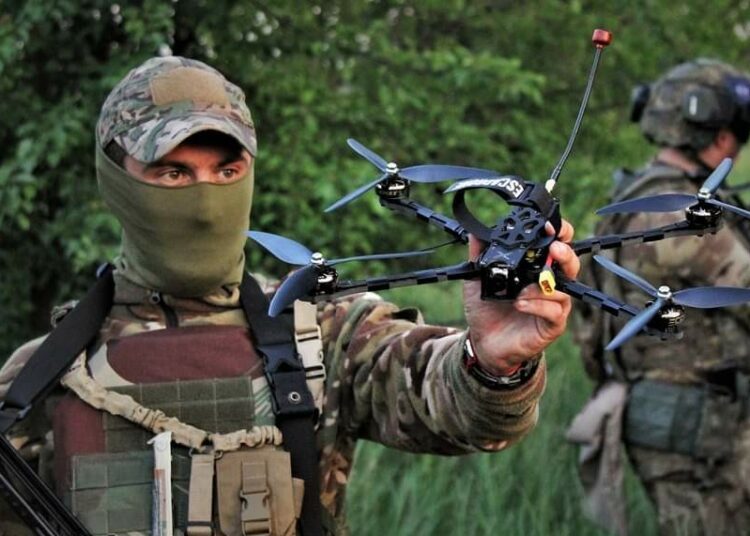
next generation military UAV deployment during modern defense operations

🛡 4️⃣ Counter-UAV Considerations

As UAV capabilities expand, so do counter-drone technologies. Military planners now consider UAV survivability against:

  • Electronic jamming
  • Directed energy systems
  • Advanced radar detection
  • Anti-drone missile defenses

Future deployments must address both offensive and defensive UAV ecosystems.


🌍 5️⃣ Strategic Implications for Global Defense

The increasing role of UAVs reflects broader structural changes in modern warfare:

  • Reduced pilot risk
  • Lower operational costs
  • Faster decision loops
  • Greater data-driven warfare

By 2026, UAV deployment is no longer a supplementary capability — it is a strategic necessity.


🧠 Conclusion

The evolution of military UAV systems represents far more than incremental technological progress. It reflects a structural transformation in how modern defense forces conceptualize power projection, intelligence dominance, and operational superiority across contested environments.

As autonomy, AI integration, and network-centric warfare architectures continue to mature, the global UAV ecosystem will not merely support future military doctrine — it will actively shape the strategic framework of next-generation defense planning.

For further analysis on autonomous warfare systems, see our report on autonomous combat drones and air superiority doctrine.

The Rise of Autonomous Combat Drones: Redefining Air Superiority Doctrine in Modern Warfare


UAV Intelligence will continue to monitor developments regarding next-generation autonomous UAV integration within European defense structures.

— Analysis by Gurkan Bal
Founder & Editor | UAV Intelligence

Tags: Autonomous Military SystemsDefense Drone ProgramsFuture Air WarfareGlobal UAV ProgramsMilitary Drone StrategyMilitary UAV Deployment
globalskyrides-luxury-jet-banner globalskyrides-luxury-jet-banner globalskyrides-luxury-jet-banner
Next Post

US DoD Expands Autonomous Drone Swarm Testing in Pacific Exercises

Gürkan BAL

Gürkan BAL

Gurkan Bal Founder & Editor – UAV Intelligence Gurkan Bal is the founder and editor of UAV Intelligence, an independent global media platform focused on unmanned aerial systems, defense technologies, and drone industry developments. He covers military UAV capabilities, autonomous aerial systems, and global drone industry trends, providing structured analysis on emerging aerospace technologies and defense innovation.

Related News

MQ-9B and Gambit 6 uncrewed aircraft planned to receive MBDA SPEAR precision-strike weapon integration.

GA-ASI and MBDA Plan SPEAR Integration for MQ-9B and Gambit 6

by Gürkan BAL
July 21, 2026
0

General Atomics Aeronautical Systems and MBDA will explore the integration of SPEAR precision-strike weapons onto the MQ-9B and Gambit 6...

BETA Technologies MV250 hybrid-electric VTOL aircraft equipped with Sikorsky MATRIX autonomy for contested military logistics.

Sikorsky Integrates MATRIX Autonomy Into BETA Technologies’ MV250

by Gürkan BAL
July 21, 2026
0

Sikorsky Integrates MATRIX Autonomy Into BETA Technologies’ MV250 The autonomous hybrid-electric VTOL aircraft is being developed for contested logistics, rapid...

Thunder autonomous hybrid-electric VTOL aircraft developed by Anduril and Archer Aviation for loyal-wingman military operations.

Anduril and Archer Unveil Thunder Autonomous Attack Rotorcraft

by Gürkan BAL
July 21, 2026
0

Thunder is a new autonomous hybrid-electric VTOL aircraft jointly developed by Anduril and Archer Aviation to support future attack helicopter...

Lockheed Martin MORFIUS X-Rotor airborne counter-drone system designed to defeat large UAV swarms.

MORFIUS X-Rotor Targets Large Drone Swarms With High-Power Microwaves

by Gürkan BAL
July 21, 2026
0

MORFIUS X-Rotor Targets Large Drone Swarms With High-Power Microwaves Lockheed Martin says its reusable airborne counter-UAS system can neutralise more...

Next Post
US DoD Expands Autonomous Drone Swarm Testing in Pacific Exercises

US DoD Expands Autonomous Drone Swarm Testing in Pacific Exercises

AI-Powered UAV Navigation Systems Achieve Breakthrough in GPS-Denied Environments

AI-Powered UAV Navigation Systems Achieve Breakthrough in GPS-Denied Environments

Recent Posts

  • GA-ASI and MBDA Plan SPEAR Integration for MQ-9B and Gambit 6
  • Sikorsky Integrates MATRIX Autonomy Into BETA Technologies’ MV250
  • Voyageur Becomes Canadian Launch Customer for Airbus U030 Flexrotor
  • Anduril and Archer Unveil Thunder Autonomous Attack Rotorcraft
  • MORFIUS X-Rotor Targets Large Drone Swarms With High-Power Microwaves

Recent Comments

No comments to show.
Küresel Haber Portalı Küresel Haber Portalı Küresel Haber Portalı

Archives

  • July 2026
  • May 2026
  • March 2026

Categories

  • Advanced Air Mobility
  • AI & Autonomous Systems
  • Analysis & Reports
  • Commercial & Civil Drones
  • Counter-Drone Systems
  • Defense & Military UAV
  • Drone Regulations
  • Education & Training
  • Industry & Companies
  • Technology & Components
  • UAV News

Categories

  • Advanced Air Mobility
  • AI & Autonomous Systems
  • Analysis & Reports
  • Commercial & Civil Drones
  • Counter-Drone Systems
  • Defense & Military UAV
  • Drone Regulations
  • Education & Training
  • Industry & Companies
  • Technology & Components
  • UAV News

Recent Posts

  • GA-ASI and MBDA Plan SPEAR Integration for MQ-9B and Gambit 6
  • Sikorsky Integrates MATRIX Autonomy Into BETA Technologies’ MV250
  • About
  • Contact
  • Editorial Policy
  • Privacy Policy
  • MARKETPLACE

© 2018–2026 UAV Intelligence — Global UAV News, Defense & Drone Industry Analysis.

Welcome Back!

Login to your account below

Forgotten Password?

Retrieve your password

Please enter your username or email address to reset your password.

Log In
No Result
View All Result
  • UAV News
  • Defense & Military UAV
  • Commercial & Civil Drones
  • Technology & Components
  • Analysis & Reports
  • Industry & Companies
  • Counter-Drone Systems
  • Advanced Air Mobility
  • AI & Autonomous Systems
  • Education & Training

© 2018–2026 UAV Intelligence — Global UAV News, Defense & Drone Industry Analysis.