

✍️ CONTENT
The North Atlantic Treaty Organization (NATO) has accelerated the integration of advanced counter-UAV systems across member states in response to the growing proliferation of autonomous drone threats.
Recent military assessments indicate that small, low-cost unmanned aerial vehicles have significantly altered tactical engagements across multiple conflict zones. The rapid adoption of autonomous and semi-autonomous UAV platforms has introduced new vulnerabilities within conventional air defense structures.

Expanding Multi-Layered Defense Architecture
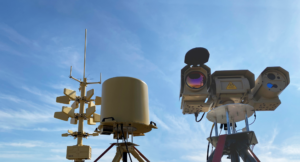
NATO’s updated counter-UAV framework focuses on a multi-layered detection and neutralization strategy, including:
-
AI-powered radar tracking systems
-
Radio-frequency jamming technologies
-
Directed energy weapons (DEW)
-
Integrated air defense command systems
By merging kinetic and non-kinetic interception capabilities, alliance forces aim to address both swarm-based drone attacks and high-endurance reconnaissance platforms.
Autonomous Threat Evolution
The increasing availability of AI-enabled navigation and swarm coordination technologies has transformed UAVs from reconnaissance tools into scalable offensive assets.
Military analysts warn that decentralized drone swarms capable of adaptive maneuvering pose significant challenges to traditional missile-based interception systems.
Strategic Implications for Alliance Defense
The acceleration of counter-UAV integration signals a broader doctrinal transformation within NATO’s defense posture.
Rather than treating drones as peripheral threats, alliance planning now categorizes autonomous aerial systems as core operational variables in future warfare modeling.
As autonomous UAV ecosystems mature globally, counter-drone capabilities will become equally central to maintaining aerial superiority and force survivability.

🧭 UAV Intelligence will continue monitoring NATO’s evolving counter-UAV architecture and its implications for future alliance defense strategy.
— Analysis by Gurkan Bal
Founder & Editor | UAV Intelligence