

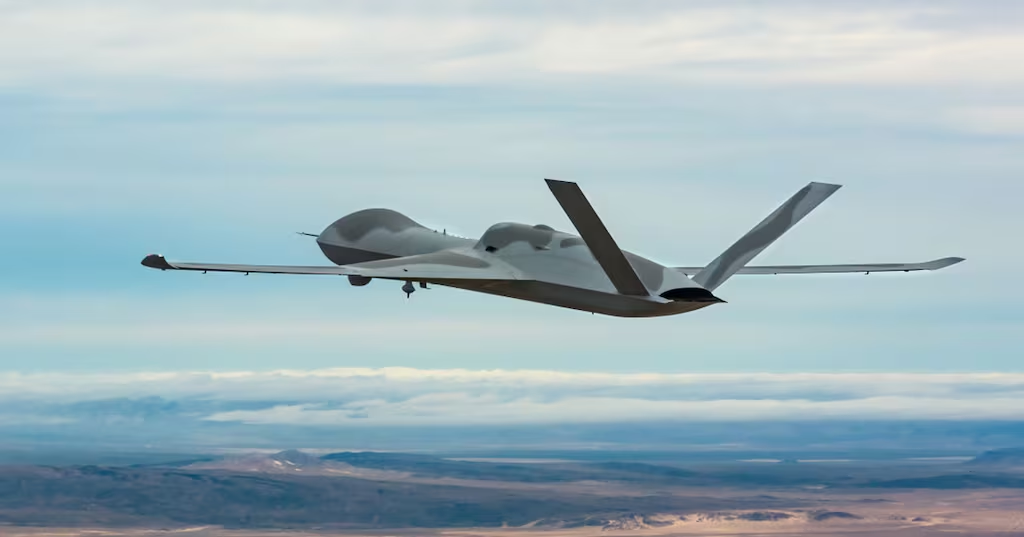
Introduction: A Generational Threshold in Aerial Warfare The successful execution of flight exercises between the F-22 Raptor and the MQ-20 autonomous platform marks a definitive milestone in the transition toward 6th-generation warfare. This operation moves beyond experimental modeling into a functional “system of systems” where 5th-generation stealth dominance is force-multiplied by autonomous robotic intelligence. We are witnessing a paradigm shift: air superiority is no longer a localized achievement of a single elite pilot, but a distributed network capability that merges human intuition with machine-speed processing.
Technical Insight: The Role of ‘Loyal Wingman’ Technology (MQ-20) The MQ-20 platform, serving as the “Loyal Wingman,” represents the technical centerpiece of this evolution. Engineered for high-level autonomy, the MQ-20 functions as an attritable, modular extension of the lead aircraft. Its role within this tactical framework is to operate as a forward-deployed sensor and weapons node, capable of penetrating high-threat environments that would pose an unacceptable risk to manned assets. By delegating kinetic and electronic warfare tasks to the MQ-20, the integrated formation gains an unprecedented level of situational awareness and tactical flexibility.
Pilot’s Perspective: Cognitive Dominance and MUM-T Dynamics From the cockpit, Manned-Unmanned Teaming (MUM-T) fundamentally redefines the pilot’s mission profile. The traditional role of the “stick-and-rudder” operator is being replaced by that of a Mission Commander. This integration significantly alters cockpit workload; while the autonomous systems handle the complexities of station-keeping, sensor fusion, and initial threat detection, the pilot is freed to focus on high-level tactical synthesis and strategic decision-making. This reduction in manual cognitive saturation allows for superior rapid-response capabilities in the most contested airspaces.
Strategic Impact: Implications for Global Air Superiority The long-term strategic implications of this exercise are profound. The fusion of the F-22’s peerless air-to-air capabilities with the cost-effective scale of the MQ-20 provides a robust counter-strategy to near-peer Anti-Access/Area Denial (A2/AD) environments. This capability ensures that global air superiority remains a viable objective by allowing the human element to remain protected while the unmanned “wingman” absorbs risk and expands the combat radius. This successful exercise confirms that the future of air dominance belongs to those who can most effectively integrate human judgment with autonomous volume.