

Drones in Agriculture, Livestock and Forestry (AgTech 2026)
(Global Analysis – Business & Technology Combined)
(Global Industry Analysis)
— Analysis by Gürkan Bal
Founder & Editor | UAV Intelligence
🌾 Drone Revolution in Agriculture: Not Intuition, But Data
The agriculture sector is one of the areas where drone technology has created the fastest and most significant impact.
Traditional agriculture model:
👉 observation + experience
New model:
👉 data + analysis + automation
Thanks to drones:
- not field-based but meter-level management
- not general but targeted intervention
- not estimation but measurement
has become possible.
👉 Drones are no longer equipment in agriculture;
they are decision-making systems.
🌱 NDVI and Multispectral Analysis
The most critical power of drones:

👉 seeing crops not with the eye, but with data
NDVI (Normalized Difference Vegetation Index):
- crop health analysis
- early disease detection
- water stress identification
- yield estimation
Multispectral cameras:

- detect problems invisible to the naked eye
👉 Thanks to this system, the farmer:
❌ does not spray the entire field
✔ targets only problematic areas
💧 VRT (Variable Rate Technology)
Systems integrated with drones:
👉 Variable Rate Technology (VRT)
What does this provide?
- different dosage for each area
- prevention of unnecessary chemical usage
- cost reduction
- yield increase
👉 Agriculture is no longer uniform;
it is a micro-management model
🚁 Spraying and Fertilization Drones

The most common use of drones in agriculture:
- pesticide application
- fertilization
- seeding
Advantages:
- fast application
- labor savings
- access to difficult terrain
- water and chemical savings
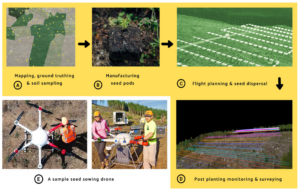
👉 1 drone can do the work of 20–30 workers
🐄 Drone Use in Livestock
Drones are not only used in crop production but also play a critical role in livestock.
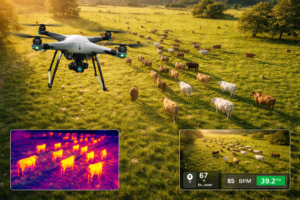
Use cases:
- herd tracking
- locating lost animals
- large area monitoring
- pasture analysis
- behavior tracking
👉 In large farms, drones become:
shepherd + security + monitoring system
🌲 Forestry and Drone Seeding
Drone usage in forestry is rapidly expanding.
Main applications:
- early fire detection
- post-fire analysis
- reforestation
🌱 Drone Seeding
Drone-based seeding:
- access to unreachable areas
- rapid reforestation
- automated distribution
🌍 Carbon Economy (CRITICAL)
Drones are no longer:

👉 just planting trees
👉 they are measuring carbon
- carbon emission analysis
- forest carbon stock monitoring
- carbon credit generation
👉 This sector is:
💥 a multi-billion dollar market of the future
📊 Business Models and Revenue
This sector is:
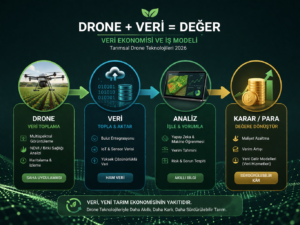
👉 not just technology
👉 a business opportunity
💰 1. Service Model
- drone spraying services
- data analysis services
- mapping
💰 2. Data Sales
- field data
- analysis reports
- seasonal monitoring
💰 3. Corporate Projects
- large farm contracts
- cooperatives
- government-supported projects
👉 The real money is:
❌ not in selling drones
✔ in data and services

⚠️ Regulation and Operations
Agricultural drone usage is regulated by:
- flight permissions
- licensing
- chemical usage regulations
Especially:
shape this field.
🧠 Future: Autonomous Agriculture
In the near future:
- autonomous drone fleets
- AI-powered analysis
- real-time decision systems
will become standard in agriculture.
👉 Drone + AI =
fully autonomous farming
🎯 Conclusion
Drone technology in agriculture:
- reduces costs
- increases efficiency
- protects the environment
- generates data
👉 Agriculture is no longer:
❌ manual
✔ a data-driven industry
🔗 CONTINUE
👉 Continue: AgTech Drone Market, ROI and Precision Agriculture Analysis →
👉 How to build an agricultural drone business
👉 Equipment selection (2026)
👉 Profitability analysis