

Drones in Media, Advertising, Tourism and Digital Show Economy (2026)
(Global Industry Analysis)
— Analysis by Gurkan Bal
Founder & Editor | UAV Intelligence
🎬 The Transformation of Visual Economy
Drone technology has fundamentally reshaped the media and advertising industry. What was once dependent on helicopters, cranes, and high-cost production equipment has evolved into a more accessible, flexible, and creative visual ecosystem.
Today, drones are not just tools for capturing aerial footage—they are redefining how stories are told.
This transformation is driven by three key advantages:
- Cost efficiency → up to 70% lower production costs
- Accessibility → ability to reach complex or restricted environments
- Creative freedom → dynamic and immersive camera movement
👉 Drones are no longer equipment;
they are the new standard of visual production.
🎥 Film, TV and Production Industry
Drones have significantly influenced cinematic language.
They are now widely used in:
- establishing shots
- action sequences
- landscape transitions
- urban and nature panoramas
With the rise of FPV (First Person View) drones:
- continuous single-shot scenes
- indoor-to-outdoor transitions
- high-speed tracking shots
have become possible.
👉 FPV technology eliminates traditional camera limitations
and introduces a new dimension of visual storytelling.
📢 Advertising and Brand Communication
For brands, drones are no longer just a visual tool—they are a storytelling medium.
Key applications include:
- automotive commercials
- real estate marketing
- tourism campaigns
- hotel and resort promotions
- city branding content
Drone visuals create a strong “immersion effect”, allowing viewers to feel part of the scene.
👉 This directly increases engagement and conversion rates.
🌍 Tourism and Destination Marketing
In the tourism industry, drones have become essential for global promotion.
They are widely used for:
- destination storytelling
- natural landscape visualization
- resort and hotel showcases
- cultural and historical site promotion
Coastal regions, heritage sites, and natural parks are now marketed globally through aerial visuals.
👉 Drones transform tourism into a visual experience economy.
🎮 FPV Drones: The New Visual Language
FPV drones have created a new category within media production.
Applications:
- sports filming
- automotive tracking
- extreme action content
- social media production
Advantages:
- high-speed maneuverability
- ultra-dynamic movement
- immersive real-time perspective
👉 FPV = cinematic experience + action realism
🎆 Drone Light Show Economy
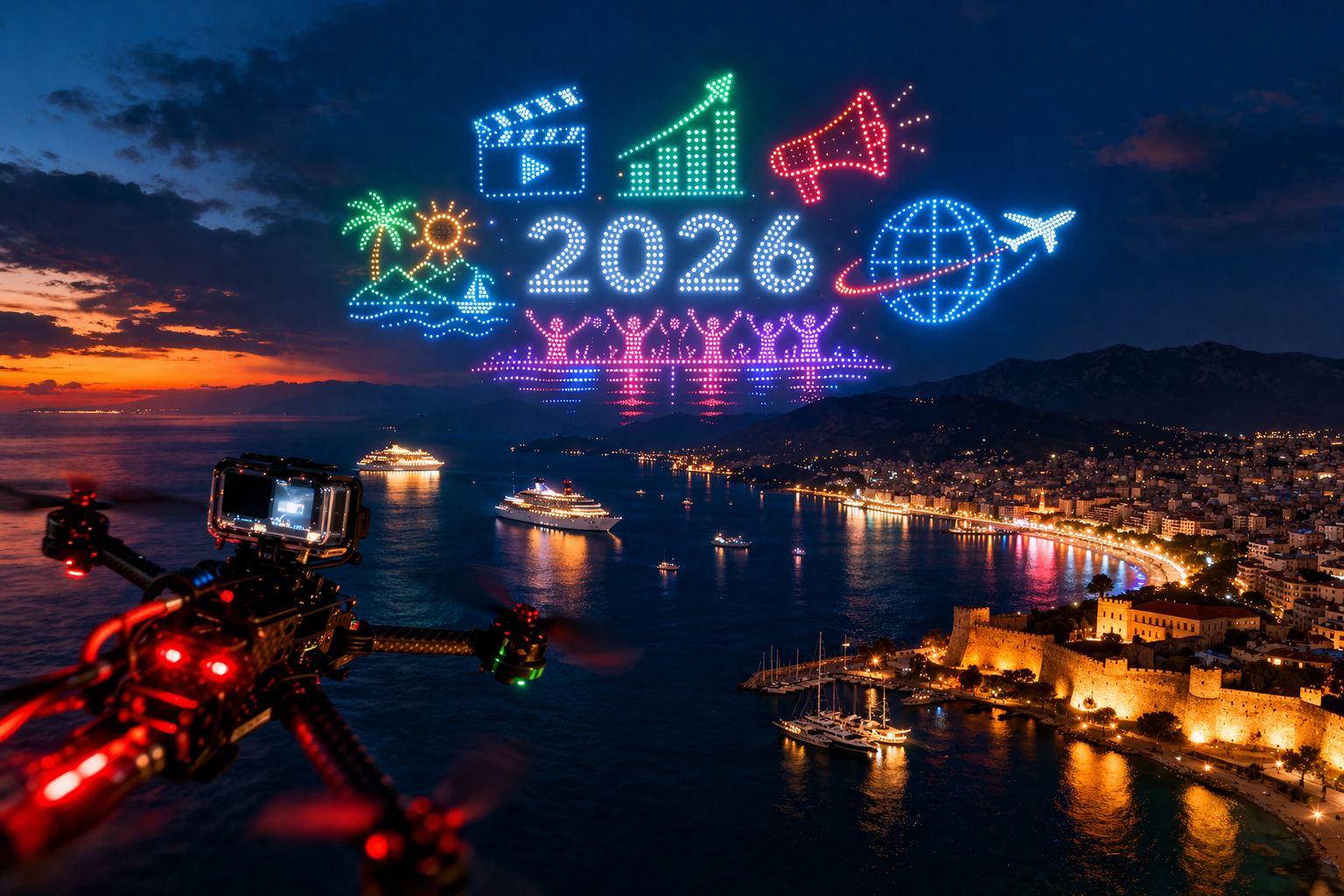
Drone light shows are rapidly replacing traditional fireworks.
Key advantages:
- environmentally friendly
- reusable systems
- programmable and scalable
- brand-integrated visual storytelling
Applications:
- large-scale events
- festivals
- brand launches
- national celebrations
- sports entertainment
Hundreds or even thousands of drones operate in synchronization, creating digital aerial performances.
👉 This is no longer entertainment—
it is an emerging industry.
📱 Social Media and Content Economy
Drones have become a powerful tool for content creators across platforms such as:
- YouTube
- TikTok
Popular formats include:
- travel vlogs
- cinematic reels
- hyperlapse videos
- aerial storytelling
👉 Drone content gains higher engagement
due to its visual uniqueness and algorithmic advantage.
💰 Business Models and Revenue Streams
The media drone ecosystem offers multiple monetization paths:
1. Service-Based Model
- aerial filming services
- production projects
- event coverage
2. Content Licensing
- stock footage sales
- visual licensing
3. Corporate Projects
- brand partnerships
- campaign production
4. Drone Show Services
- event-based contracts
- sponsorship-driven projects
👉 The real value is not in owning a drone,
but in delivering visual and data-driven services.
⚠️ Regulations and Operational Constraints
Professional drone operations are subject to strict regulations.
Authorities such as the Federal Aviation Administration and the European Union Aviation Safety Agency define rules regarding:
- flight permissions
- urban airspace restrictions
- crowd operations
- insurance requirements
👉 Commercial drone usage requires licensing, compliance, and operational planning.
🧠 The Future: AI and Autonomous Filming
The future of media drones lies in automation and artificial intelligence.
Emerging trends:
- AI-powered subject tracking
- automated flight choreography
- real-time scene analysis
Soon, drones will not only capture visuals but also decide how to capture them.
👉 Operator role → supervisor
👉 Drone role → autonomous creator
🎯 Conclusion
Drone technology in media and advertising:
- reduces production costs
- increases creative possibilities
- accelerates content creation
- enables new business models
Today, drones are not just cameras—
👉 they are the infrastructure of the visual economy.
🔗 Continue Reading
👉 Drone Economy: Global Use Cases, Sectoral Transformation & Future Roadmap (2026)
👉 How to Build a Drone Production Business (2026 Guide) (coming next)